


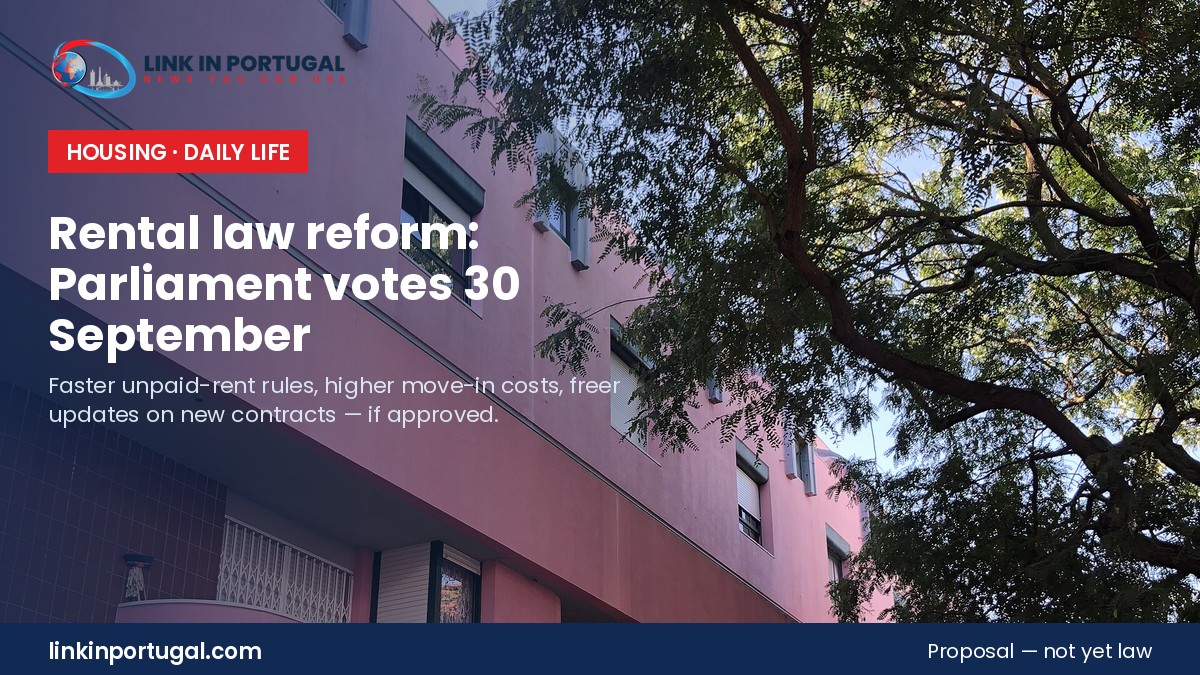
On Wednesday, 30 September 2026, Portugal’s Parliament is due to debate and vote in general on the government’s rental-law bill. Most immigrants here rent, so the draft matters: a shorter unpaid-rent window, higher move-in costs, and freer rent updates on new contracts. Nothing changes overnight — this is still only a proposal.
What is being voted on
The government filed Proposta de Lei n.º 103/XVII on 12 August 2026 (admitted 1 September). Reporting on the signed text says the bill asks Parliament for a 180-day legislative authorisation to amend the New Urban Lease Regime (NRAU) and related laws, with a draft decree annexed. A general vote is only the first step. If it passes, the text goes to committee, then a final vote. Late-September reporting said final publication may come only after the 2027 State Budget debate. Until a law appears in the Diário da República, today’s rules stay in force.
What the draft would change
From RTP, 24 Notícias and detailed reporting on the annexed draft:
- Unpaid rent: end the lease after two months unpaid (today: three).
- Repeated late payment: more than eight days late more than three times in 12 months, or four times in 18 months, could also justify ending the lease.
- Advance rent: written agreement for up to three months in advance (DECO: current usual limit is two).
- Deposit (caução): no legal cap (DECO: current cap is two months’ rent).
- New contracts: the 2% yearly update limit would end; Mais Habitação limits on starting rent when one lease follows another would be repealed.
- Open-ended leases: landlord could end with at least three years’ notice.
- Vulnerable tenants: special protection kept for some pre-1990 leases and for tenants aged 65+ or with 60%+ disability, unless they agree otherwise.
RTP and tenant groups also warn that rules on who can take over a contract after a tenant dies would change. Treat that as contested until a final text is published.
What it means for immigrants who rent
If you are house-hunting, three months’ advance rent plus an uncapped deposit would raise the cash you need before you get keys — hard for newcomers still settling salary, NIF and bank accounts. DECO told Parliament that someone may afford the monthly rent but not the first payment plus advances and a high deposit.
If you already have a contract, the shorter unpaid-rent clock and freer updates on new contracts matter most when you renew or move. Ending a lease still usually needs a legal procedure; landlord representatives say contested cases can take years. Faster legal grounds are not the same as being put on the street the next day.
What to do now
- Do not panic-move. Your current contract stays under today’s law until any new rules apply to you.
- Keep proof: signed contract, rent receipts, transfers, and messages with the landlord.
- House-hunting? Budget a large move-in total and get every advance and deposit in writing before you transfer money.
- Pay on time if you can — the draft shortens the unpaid-rent window from three months to two.
- Watch the 30 September vote and any committee follow-up.
Key dates
- 12 August 2026 — bill filed
- 1 September 2026 — admitted in Parliament
- 30 September 2026 — general debate and vote
- After that — committee work and final vote; publication may follow the 2027 budget debate
Sources
- RTP – Habitação: governo quer despejos em dois meses e mercado mais flexível
- 24 Notícias – As duas faces da reforma do arrendamento (28 Sep 2026)
- The Portugal Brief – Bill 103 / draft decree summary (27 Sep 2026)
- Diário Lusitano – Parlamento debate reforma do arrendamento (28 Sep 2026)
- Idealista/news – Novas regras a votos a 30 de setembro (23 Sep 2026)
This guide is general information, not legal advice. Rules change often; check the final law and, if needed, a lawyer or tenants’ association before acting. Last updated: 29 September 2026.
Featured image: Photo: DiogoBaptista / Wikimedia Commons (CC0) – EPUL Alto do Restelo, Lisbon; graphic overlay: Link in Portugal


One thought on “Rental Law Reform: Parliament Votes on 30 September – What Could Change for Tenants”